
San Miguel de Allende Authentic Experiences: The Complete Guide for VIP Travelers
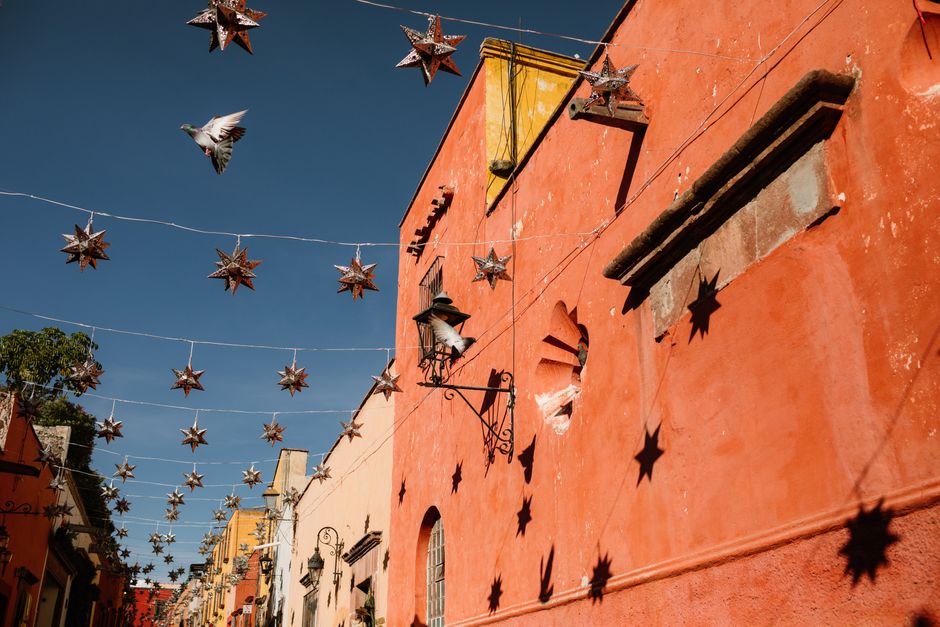
There is a particular quality to the light in San Miguel de Allende that no photograph fully captures. In the late afternoon, when the sun drops behind the Sierra Gorda mountains and its last rays catch the ochre and burnt-sienna facades of the historic center, the entire city seems to glow from within. Streets that are already beautiful become extraordinary. Terraces fill with the quiet clink of mezcal glasses. The Parroquia de San Miguel Arcángel turns from stone to amber.
This is why discerning travelers have been arriving in San Miguel de Allende for decades. Not for a landmark or an itinerary, but for a feeling that is almost impossible to articulate until you have experienced it yourself — and then impossible to forget.
This guide is for travelers who want to experience San Miguel de Allende the way it deserves: with complete comfort, total freedom, and the kind of on-the-ground logistics that let you focus on the destination rather than the details.
Why San Miguel de Allende Is Unlike Anywhere Else in Mexico
Mexico is not short of extraordinary cities. It is home to ancient ruins, world-class coastlines, and colonial centers that rival anything in Europe. But San Miguel de Allende occupies a singular position in the country’s cultural geography.
Designated a UNESCO World Heritage Site in 2008, the city’s historic center has been preserved with an unusual degree of integrity — no modern buildings interrupt the colonial streetscape, no neon signs compete with wrought-iron balconies, no franchise restaurants occupy the main plaza. The Jardín Allende, the city’s central square, looks today very much as it looked in the nineteenth century.
What has changed is the caliber of the experience available within those colonial walls. Over the past two decades, San Miguel de Allende has attracted some of Mexico’s finest chefs, boutique hotel operators, contemporary artists, and mezcal producers. The result is a city where four hundred years of architectural heritage coexists with the same level of culinary and hospitality sophistication you would find in Mexico City, Oaxaca, or internationally comparable cultural destinations.
For the VIP traveler, this combination is close to ideal. The city is compact enough to experience on foot once you are established in your accommodation, yet rich enough in experience to reward a stay of five, seven, or ten days without repetition. And because San Miguel de Allende sits at 1,900 meters above sea level in the heart of the Bajío highlands, its climate is one of the most consistently pleasant in the country: warm dry days, cool evenings, and some of the clearest skies in central Mexico.
Getting to San Miguel de Allende: The Private Transfer Difference
San Miguel de Allende does not have a commercial airport. This is, in fact, part of what has protected its character. The nearest international gateway is Del Bajío International Airport (BJX) in León/Silao, Guanajuato, approximately 90 minutes by road. The second option is Mexico City International Airport (MEX), which offers more international connections but places you 270 kilometers from the city center.
Both routes are best navigated by private transportation. Here is why.
Arriving via Del Bajío (BJX) — The Preferred Gateway
For travelers arriving from the United States, Canada, and an increasing number of European cities, BJX is the gateway of choice. The airport is well-connected, compact, and efficient. The road to San Miguel de Allende runs through the Bajío plains and into the mountains — straightforward, scenic, and fast with a private vehicle.
| Route | Distance | Private Transfer Time |
|---|---|---|
| BJX Airport → San Miguel de Allende Centro | 98 km | 90–100 minutes |
| MEX Airport → San Miguel de Allende Centro | 270 km | 2.5–3 hours |
| Querétaro City → San Miguel de Allende | 60 km | 55–65 minutes |
| Guanajuato City → San Miguel de Allende | 85 km | 75–85 minutes |
With a Mexican Xperiences private transfer, your driver meets you at the arrivals hall with a personalized name board, manages your luggage from the airport exit, and delivers you directly to your property in San Miguel de Allende — no waiting, no shared vehicles, no detours through other towns.
Arriving via Mexico City (MEX)
For travelers with connecting flights through Mexico City, or those beginning their trip with a few days in CDMX, the drive to San Miguel de Allende is a journey worth appreciating in its own right. The route climbs from the Valley of Mexico through the mountain passes of the Sierra Madre Oriental before descending into the Bajío highlands — one of the more dramatic highway drives in central Mexico.
With a private vehicle, the 270-kilometer journey becomes a comfortable three-hour transfer rather than an ordeal. Climate control, complimentary refreshments, and a route that tracks your actual itinerary rather than a bus schedule make a significant difference over that distance.
The San Miguel de Allende Experience: What VIP Travelers Actually Do Here

San Miguel de Allende rewards travelers who approach it without a rigid itinerary. The city reveals itself gradually, through a morning at the Mercado de Artesanías, an afternoon on the terrace of a rooftop restaurant, an evening following the sound of a jazz quartet to a courtyard bar you did not know existed. That said, a few frameworks help orient the experience.
Culinary Depth
The food scene in San Miguel de Allende punches well above the city’s size. A handful of the country’s most recognized chefs have chosen to open here rather than in Mexico City or Guadalajara — partly for the quality of life, partly because the discerning international clientele justifies the commitment to excellence.
What to seek out:
- Modern Mexican tasting menus — several restaurants in the historic center offer multi-course experiences that treat regional Mexican cuisine with the same rigor applied at acclaimed international restaurants. Ingredients from local producers, techniques that honor tradition while pushing form.
- Mezcal and craft spirits culture — San Miguel de Allende has become one of Mexico’s best cities for exploring artisanal mezcal. The local approach is education-forward: knowledgeable pours, producer stories, and expressions from Oaxaca, Durango, and Puebla sitting alongside Guanajuato-sourced bottles.
- Traditional market breakfast — the Mercado Ignacio Ramírez, just behind the Jardín Allende, opens early and operates at a completely different register from the city’s upscale restaurants. Freshly made gorditas, café de olla, and honest market cooking from vendors whose families have occupied the same stall for generations.
Art and Cultural Immersion
San Miguel de Allende has had a functioning art colony since the 1950s, when the city’s beauty and low cost of living attracted American and European artists who stayed and built institutions. That legacy continues in a contemporary form.
- Galleries: The city has a higher concentration of serious contemporary art galleries per capita than almost any other city in Mexico. The work is frequently internationally relevant — not purely decorative.
- El Charco del Ingenio Botanical Garden: A 67-hectare ecological reserve above the city, home to Mexico’s most significant collection of cacti and succulents. The morning light here, looking back over the city, produces one of the finest views in the Bajío.
- Fábrica La Aurora: A converted nineteenth-century textile factory that now houses galleries, design studios, antique dealers, and a handful of excellent restaurants. The architecture alone justifies the visit.
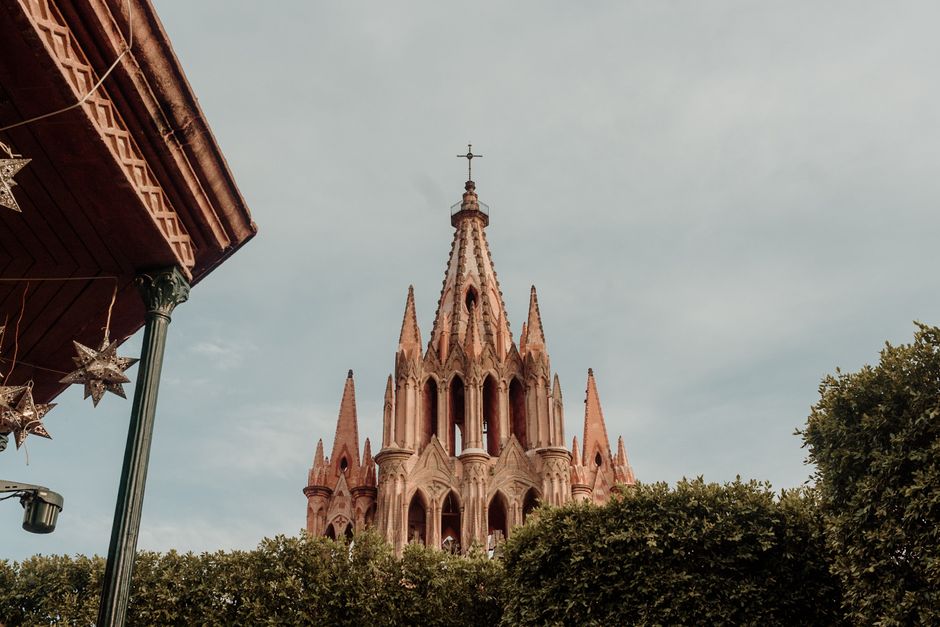
- Parroquia de San Miguel Arcángel: The city’s iconic neo-Gothic parish church, its pink limestone towers visible from almost every corner of the historic center, was designed in part by a self-taught indigenous stonemason who reportedly modeled it on postcards of European cathedrals. The result — unintentionally or otherwise — is one of the most distinctive pieces of religious architecture in the Americas.
Wellness and Spa Culture
San Miguel de Allende has invested heavily in its wellness infrastructure over the past decade. The combination of altitude, clean air, and the particular pace of the city makes it a natural setting for extended spa and wellness stays.
The thermal springs at Escondido Place and La Gruta Spa, located 10–15 kilometers outside the city center, are among the most visited in central Mexico. Both facilities feature natural hot spring pools carved into volcanic rock. The approach — mineral-rich water, open-air environments, views of the highland landscape — is distinctly Mexican and bears little resemblance to a standard hotel spa.
A private vehicle is the practical way to reach these facilities and to manage timing on your own terms.
Private Transportation Within San Miguel de Allende
Once you are established in your accommodation, the historic center of San Miguel de Allende is best explored on foot — the cobblestone streets and hillside gradients make it impractical for anything else, and the entire UNESCO-designated zone covers less than two square kilometers.
But several of the city’s finest experiences require reaching points outside that zone — and this is where a private vehicle becomes not just convenient but essential.

Day Excursions from San Miguel de Allende
San Miguel de Allende’s position in the Bajío makes it an outstanding base for day excursions to some of central Mexico’s most significant destinations:
| Destination | Distance | Private Transfer Time | What You Find |
|---|---|---|---|
| Guanajuato City | 85 km | 75–85 minutes | Colonial university city, UNESCO Heritage, underground roads |
| Querétaro Centro | 60 km | 55–65 minutes | Second UNESCO Heritage city, fine wine country |
| Dolores Hidalgo | 45 km | 40–45 minutes | Birthplace of Mexican independence, talavera pottery |
| Atotonilco Sanctuary | 14 km | 15–20 minutes | UNESCO site, pilgrimage center, remarkable baroque interior |
| Thermal Springs (La Gruta / Escondido) | 10–15 km | 15–20 minutes | Natural volcanic hot springs |
Each of these excursions follows the same private transfer logic: your vehicle, your schedule, no intermediate stops, full return flexibility. You decide when to leave and when to come back.
Understanding the Cobblestone Factor
San Miguel de Allende’s famously uneven cobblestone streets are beautiful. They are also, for vehicles and passengers alike, a significant practical consideration. Properties in the historic center are typically accessed via narrow one-way streets that require precise navigation. Luggage handling on these surfaces requires attention.
Our drivers know the city’s access routes, parking zones, and the specific approach logic for different properties. This matters more than it might seem — navigating a Suburban through a street that appears on the map to be impassable, or knowing that a specific hotel’s service entrance is three blocks from the front door, is the kind of local knowledge that arrives only with experience.
Choosing Accommodation in San Miguel de Allende
The city’s boutique hotel scene is among the finest in Mexico. Several properties are located in converted colonial mansions with courtyards, fountains, and rooftop terraces that offer direct views of the Parroquia. A few considerations for selecting the right base:
Location within the historic center: Properties within the UNESCO zone tend to be walking distance from everything that matters — the Jardín, the markets, the galleries, the best restaurants. The trade-off is that vehicle access can be complicated, and ambient noise (weekend festivals, church bells, street music) is part of the experience rather than something that can be screened out.
Terrace and rooftop access: San Miguel de Allende’s architecture tilts upward. Properties with rooftop terraces offer views that transform the experience of being in the city — the Parroquia at sunset from a terrace with a mezcal cocktail is genuinely one of the finer moments available in Mexico.
Courtyard design: The colonial mansion format creates interior courtyards that serve as the social heart of the property. Quality varies considerably. The best examples are genuinely beautiful — fountains, climbing bougainvillea, soft lighting at night.
When to Visit San Miguel de Allende
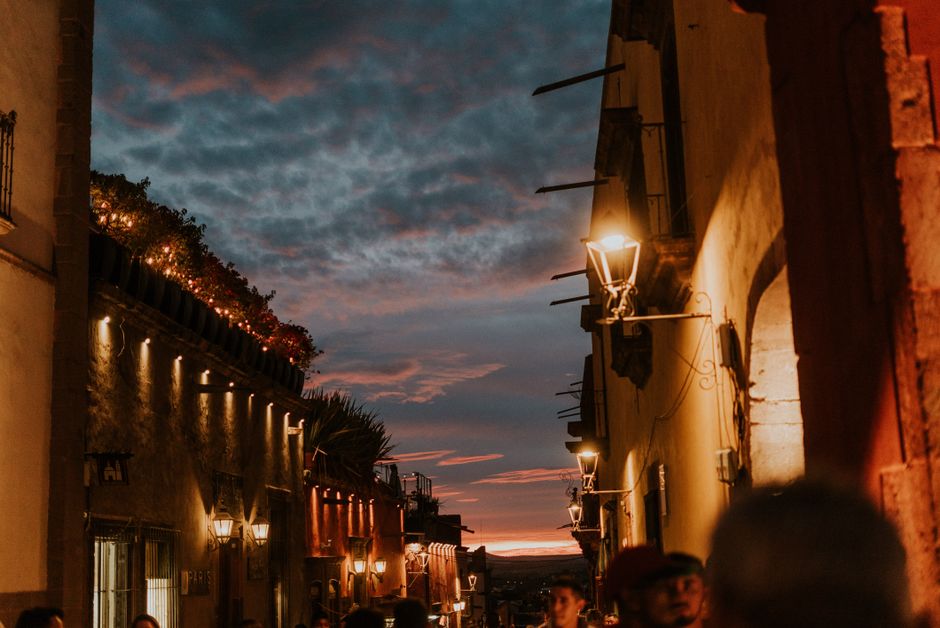
San Miguel de Allende’s high-altitude climate means there is genuinely no bad time to visit, but different seasons offer different textures.
October through February (Dry Season, High Season): The clearest skies and coolest evenings. Festival season peaks in September with the city’s famous Independence Day celebrations, which are among the most spectacular in the country. The Christmas and New Year period draws an international crowd. Book accommodation well in advance.
March through May: Shoulder season with excellent climate — days warm up more noticeably but remain comfortable. The jacaranda trees that line many streets are in bloom through March and April, turning the city into something from a painting. Fewer crowds than peak season.
June through September (Rainy Season): Afternoon rains, typically brief and intense, that clear to leave the stonework clean and the light extraordinary. The city is lush and green at this time of year. Lower hotel rates and a more local atmosphere.
Practical Information for the VIP Traveler
Altitude Acclimatization
San Miguel de Allende sits at approximately 1,910 meters above sea level. Travelers arriving from sea-level destinations — including the Riviera Maya, Los Cabos, or international cities at low altitude — may notice mild symptoms during the first 24 hours: slight breathlessness, mild headache, elevated sensitivity to alcohol.
The adjustment is typically brief. The practical implication is that your first full day is best treated as an orientation day rather than a full program — a morning in the market, a long lunch, an afternoon at the hotel. By day two, most travelers find they have fully acclimatized.
Currency and Connectivity
San Miguel de Allende is thoroughly prepared for international visitors. ATMs are available throughout the historic center, and the quality of the city’s restaurants and hotels means that international credit cards are accepted universally at the category of property most VIP travelers will visit. Cellular connectivity is strong in the city center.
Language
While San Miguel de Allende has a substantial English-speaking expat community and most hospitality professionals speak English comfortably, the city’s authentic character is fundamentally Mexican and Spanish-speaking. Learning a few phrases goes a long way — and is received warmly.
Arriving the Right Way
San Miguel de Allende rewards preparation. The city does not hide its best experiences, but it does distribute them unevenly between travelers who arrive exhausted from a complicated ground transfer and those who arrive rested, on time, and exactly where they intended to be.
The difference between a shared shuttle from BJX and a private transfer is not a matter of luxury for its own sake. It is a matter of starting the experience correctly — with the composure and flexibility that San Miguel de Allende’s particular pace requires.
Mexican Xperiences provides private ground transportation to and from San Miguel de Allende — from Del Bajío International Airport, from Mexico City, from Querétaro, and for day excursions throughout the Bajío region. Our vehicles are maintained to VIP standard. Our drivers know the city’s access routes, the properties, and the timing that makes a transfer feel seamless rather than functional.